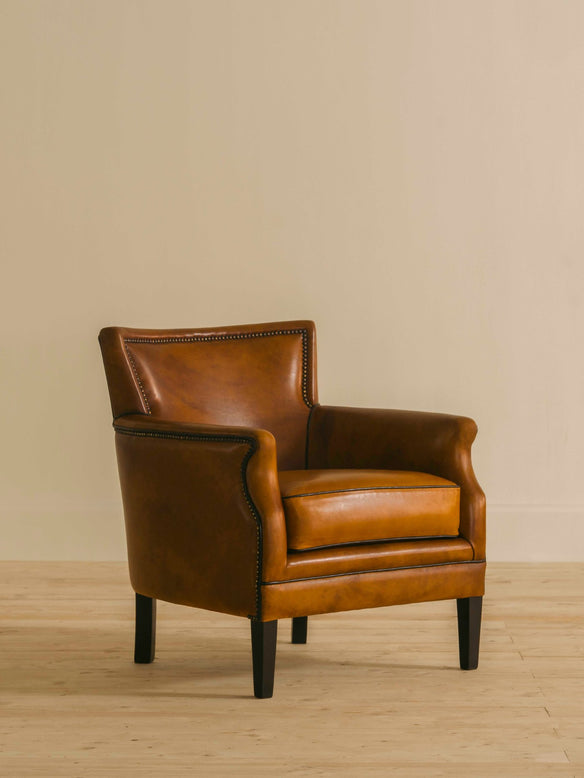
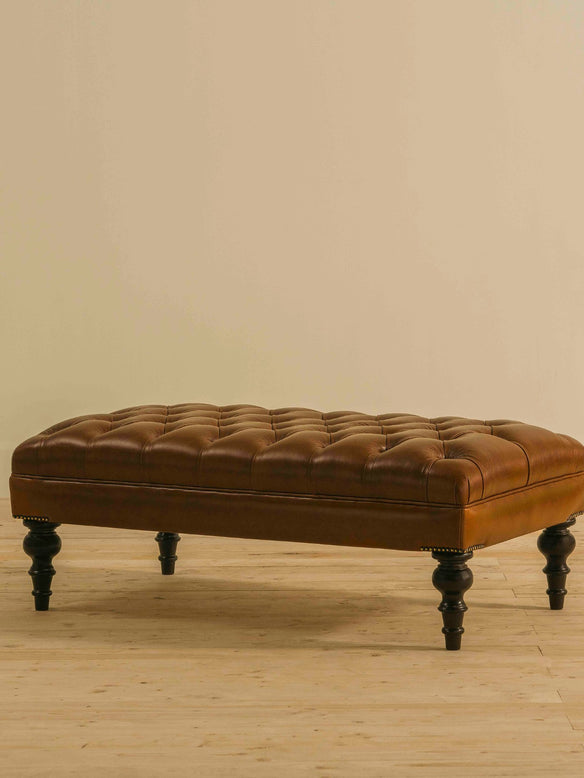
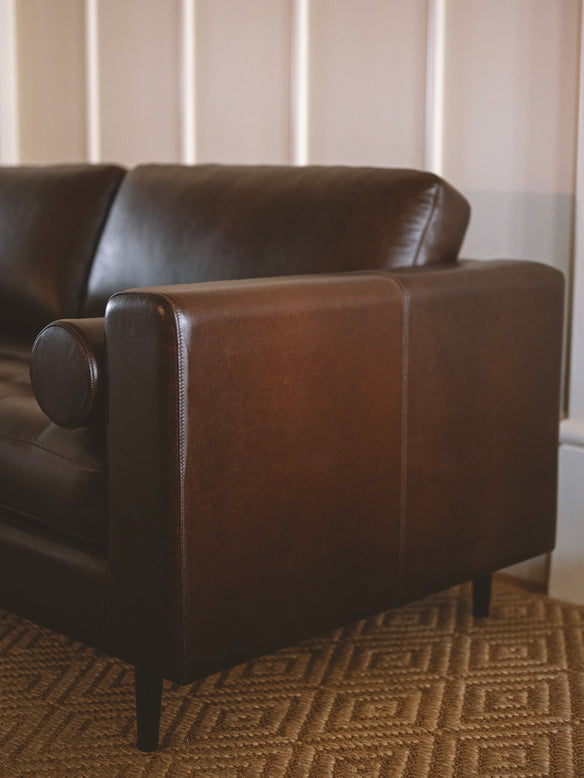
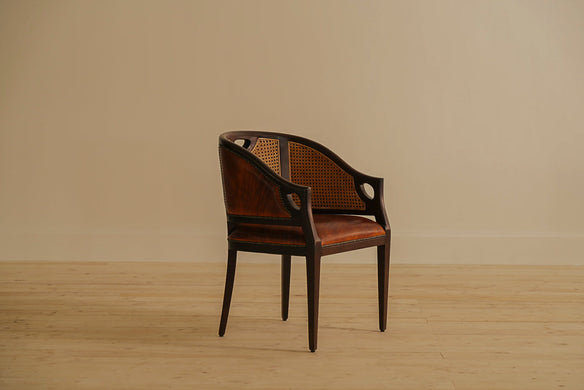
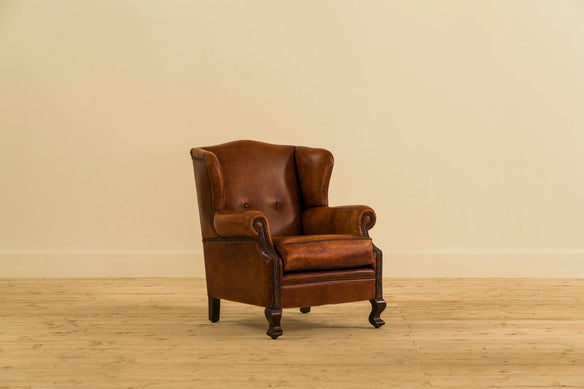
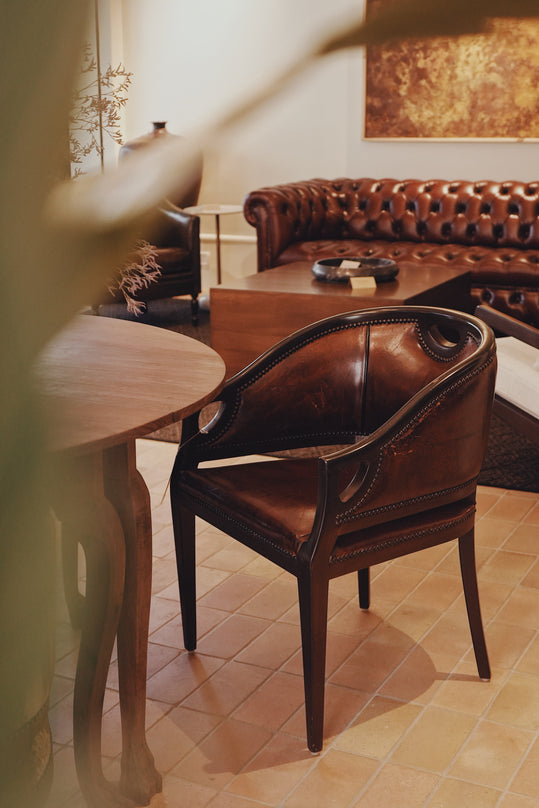
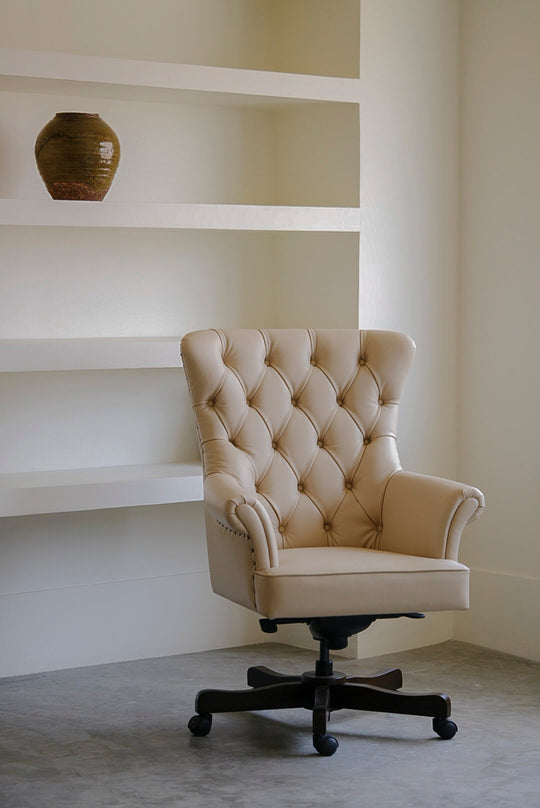
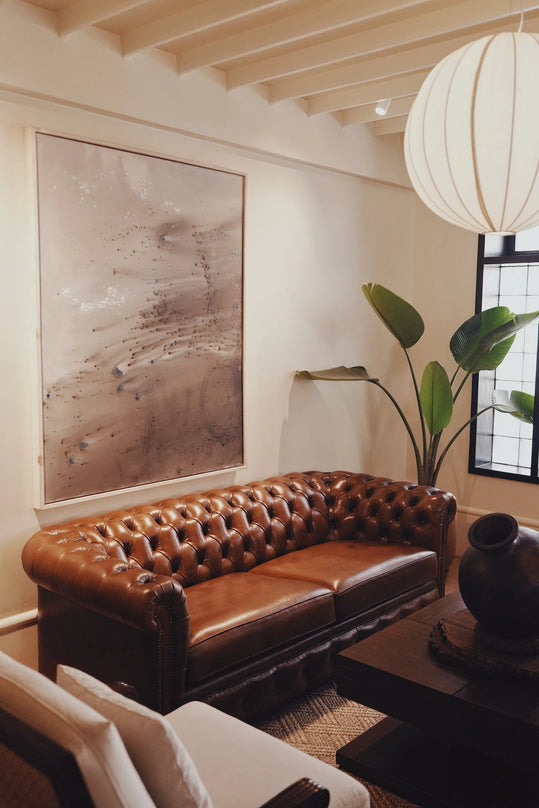

The history of the leather armchair begins long before it entered modern living spaces, born in quiet rooms where rain streaks tall windows and low light catches the deep creases of an oil-rubbed seat. Its button-tufted backrest and smooth, worn arms carry decades of late-night reading, reflection, and long conversation.
Yet this presence translates naturally to a contemporary Indian home. Set against polished stone, raw linen, and modern art, the classic leather seat anchors rooms otherwise defined by glass and steel. Its story is one of changing environments, where its core appeal as a sanctuary of comfort and quiet authority remains unaltered. Understanding this presence requires looking back at the spaces that first demanded its creation.
The Rooms That Gave the Leather Armchair Its Character
The distinct form of the traditional leather chair did not emerge in a vacuum. It was shaped by the specific requirements of nineteenth-century European libraries, private studies, and gentlemen's clubs. These were rooms dedicated to prolonged sitting, where members spent hours reading, debating trade routes, or conducting quiet business. To support this lifestyle, furniture makers moved away from the upright, thinly padded chairs of the previous century, designing deep seats, supportive armrests, and durable surfaces that could withstand constant use.
Leather became the preferred upholstery material because it resisted wear, tolerated constant use, and aged gracefully. Unlike many woven fabrics, quality leather resisted abrasion exceptionally well while developing character over time, making it especially suited to clubs, libraries, and other heavily used interiors.
This functional need naturally evolved into an aesthetic archetype. The rich texture of natural hides paired with dark timber paneling, heavy brass accents, and rows of leather-bound books created the visual foundation of classic gentleman's décor. While these private clubs solidified the chair's association with status and quiet intellect, they did not invent every variation of classic leather seating. Instead, they served as the testing ground where the physical proportions of the chair were refined for maximum endurance and comfort, becoming an important chapter in European furniture history.
Two Traditions, Two Different Ideas of Comfort
As the demand for specialized seating grew across Europe, two distinct design philosophies emerged, each offering a completely different interpretation of how a person should sit.
The Chesterfield Armchair and the Architecture of Formal Comfort
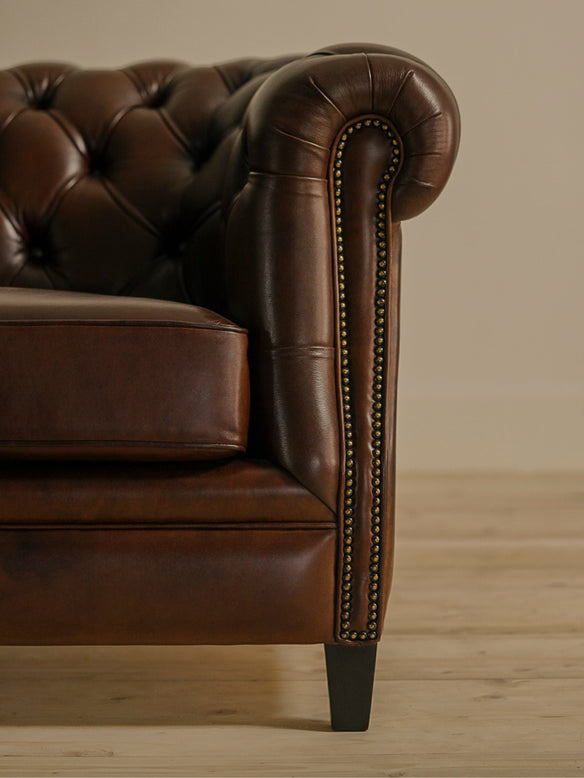
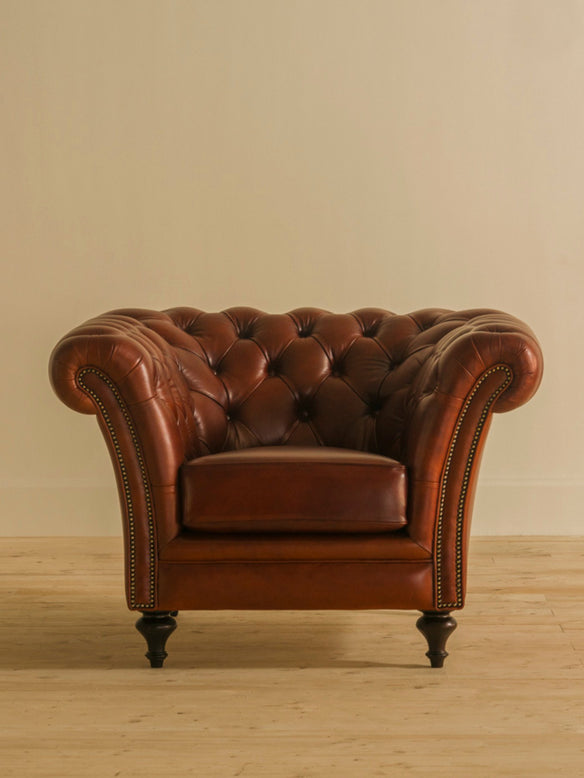
The British tradition found its ultimate expression in the Chesterfield leather armchair, a structured, commanding piece of furniture that treated classic armchair design as an extension of architecture. Defined by its rolled arms that sit at the exact same height as the backrest, deep-buttoning, and visible brass nailhead trim, this form was engineered for presence.
Popular lore often credits the origin of this design to the Fourth Earl of Chesterfield, who supposedly requested a seat that allowed a gentleman to sit upright without wrinkling his attire. While this remains an unverified historical anecdote rather than a documented fact, it accurately describes the chair's physical intent. The Chesterfield armchair demands a certain posture, offering formal support while using dense, tufted cushioning to ensure comfort. It later became a familiar presence in law offices, diplomatic headquarters, and grand libraries. This disciplined approach to traditional furniture forms eventually travelled across borders, later becoming central to the dedicated furniture-making practice at Chester's India.
The French Club Chair and a Softer Kind of Comfort
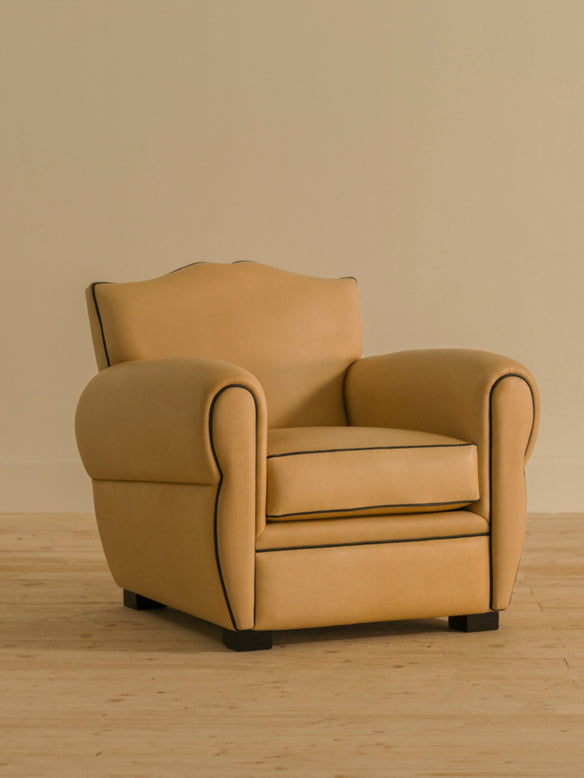
Across the English Channel, French workshops developed a completely different response to relaxed seating. Popularized in the early twentieth century as the fauteuil confortable (the comfortable armchair), this movement prioritized ease over rigid domestic protocols.
Unlike the plush, rounded silhouettes of classic lounge chairs, early French club chairs introduced clean lines and a sharp squareness characteristic of 1920s design. The Madame armchair stood as one of the earliest models of this shift, establishing a new design language. Modern interpretations in the French Club Chairs collection, including the Madame, Monsieur, Mustache, and Boudoir, continue to celebrate this refined, architectural approach to comfort.
When European Furniture Knowledge Travelled to Bangalore
The story of these classic forms took a significant turn in 1986, when MV Ramaswamy founded Chester's in Bangalore as a maker of fine furniture. As pioneers of the centuries-old Chesterfield technique in India, the family-owned business established a legacy built on the understanding that true luxury is fundamentally a relationship with time. This guiding philosophy sparked a serious interest in heritage furniture, leading to a pivotal milestone in 1994 when the brand sent four master Indian craftsmen to the Netherlands to master the intricate art of deep-buttoned leather upholstery.
This was not a simple case of importing a foreign aesthetic or setting up an assembly line for mass production.
It was a genuine exchange of knowledge.
The precision of European upholstery techniques was brought back to Bangalore and absorbed into the existing regional traditions of Indian carpentry, hand-stitching, and leatherworking. By combining these structural methods with local workshop knowledge, India's rich traditions of craft were united with European styles. This cross-cultural dialogue did something vital: it helped establish a distinctive tradition of leather furniture craftsmanship in India.
Interpretation, Not Imitation
A historic design only remains relevant if it adapts to the way people live today. A literal reproduction of a nineteenth-century club chair often fails in a modern home because room dimensions, daily habits, and lifestyles have fundamentally shifted. True longevity in furniture making relies on thoughtful reinterpretation rather than literal copying.
By subtly adjusting the slope of a backrest, refining the scale of the arms, and altering seat depth, modern makers introduce a contemporary approach to ergonomics without losing the soul of the original form. This way of working reflects Chester's India's modern philosophy, where historical forms are revitalized for modern homes and workplaces rather than reproduced unchanged.
It ensures that a traditional leather armchair can belong in a present-day space without becoming an out-of-place period prop.
The collection demonstrates how historical proportions can be refined and sharpened to sit comfortably within open-plan interiors and large modern residences alike, remaining deeply rooted in both European-inspired furniture traditions and contemporary Indian living.
The Armchair Leaves the Club
In contemporary interior design, the leather chair has successfully escaped the confines of dark, wood-paneled studies. The modern preference has shifted away from rigid, matching sets of furniture toward a more eclectic, layered approach where a single, well-chosen luxury leather armchair acts as an independent statement piece.
Where the Armchair Finds Its Place
A single armchair requires space to breathe, allowing its form to interact naturally with the architecture of a room. Positioned at an angle toward a wall of books, paired with a slender floor lamp, it forms a dedicated reading corner. In a grander setting, placing it directly opposite a plush, linen-upholstered sofa introduces an intentional contrast in material textures, anchoring the living area without overwhelming it.
Because relationships and warmth sit at the heart of the home, the chair also finds an intuitive place in more private sanctuaries where family life unfolds. Set near a quiet bedroom window or adjacent to a striking piece of artwork, it establishes a small retreat for solitary reflection or intimate conversation away from the shared household spaces. Similarly, when situated within a home library or study, it creates an inviting zone dedicated entirely to thought, hospitality, and comfort.
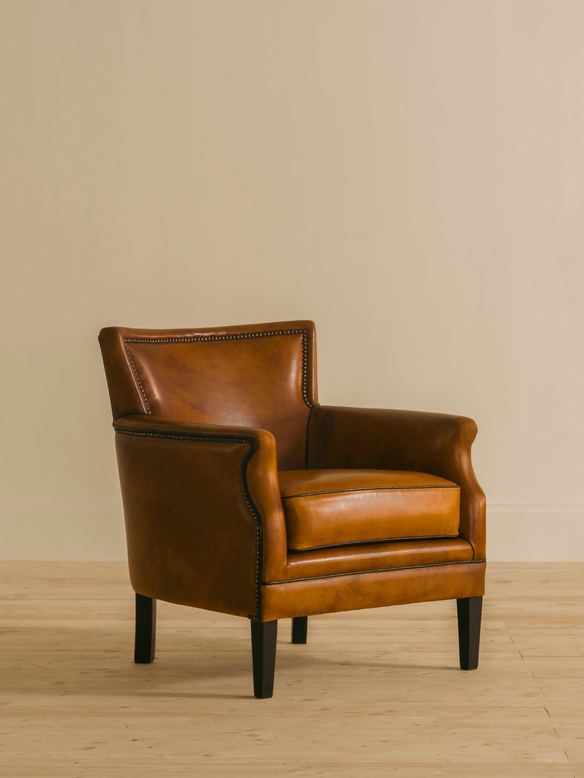
The choice of colour also changes how the chair interacts with a room. While deep, classic finishes like Vintage Berry Red or Whiskey reinforce a heritage feel, contemporary options like Shadow Olive, Ocean Blue, or Nappa French Beige allow the chair to blend into brighter, modern spaces. This flexibility makes it easy to pair classic leather seating with modern Indian materials, creating a balanced dialogue between rich hand-stained hides, cool stone floors, exposed wood, and industrial metal accents. You can explore how these structural forms are being adapted for diverse spaces across the full range of leather armchairs and single seaters, which continue to redefine the presence of leather armchairs in India.
Leather, Patina and the Value of Time
The true value of a premium leather piece lies in how it responds to the passage of time. Unlike synthetic alternatives that degrade and crack, full-grain leather treated with traditional finishes acts as a natural archive of use. The hide gradually responds to sunlight, air, and the physical contact of daily life, shifting in tone and character to record the patterns of its environment.
This natural ageing process is not a sign of wear to be hidden; it is the very characteristic that gives a classic leather armchair its personality.
The changing colour and softer surface reveal the natural ageing of the leather, while the chair's lasting comfort depends on the quality of its frame and upholstery beneath. Because these pieces are built to endure as evergreen heirlooms of the future, deliberate care and professional furniture restoration are natural parts of ownership. Choosing a chair made with authentic upholstery and finishes means investing in an object that actively rejects the disposable nature of modern consumer goods, growing more distinctive every year.
Conclusion: A Chair Becomes Part of the Home's Memory
From its origins in the exclusive libraries of Europe to its manufacturing journey in the Bangalore workshops, the history of the leather armchair shows a remarkable ability to adapt. It proves that authentic design survives not by remaining frozen in the past, but through careful restoration and continuous reinterpretation.
When a family-owned workshop combines structural integrity with genuine comfort and contemporary ergonomics, the resulting object ceases to be a mere decorative choice.
A well-made armchair does more than occupy a corner. With time, it becomes an integral part of the home's daily rhythm, holding the very life and relationships that unfold around it.
For those curious to see how these historic forms have been interpreted for contemporary Indian homes, Chester's leather armchairs and single seaters collection can be explored online or experienced at the Bangalore showrooms on Infantry Road and Vasanth Nagar.